Clogged AC Drain Line: Warning Signs and How to Clear It
Most of the time, your AC's drain line does its job in total silence and you never think about it once. Then one humid August afternoon you notice a water stain spreading across the ceiling under the attic unit — or the system quietly shuts itself off in the middle of a heat wave — and suddenly a $3 length of PVC pipe is the most important thing in your house.
A clogged AC drain line is one of the most common service calls we run all summer in central Alabama, and it's also one of the most preventable. The reason it happens so much here comes down to our humidity, which we'll get into. The good news is that catching it early is easy once you know the signs, and clearing a minor clog is something a lot of homeowners can do themselves.
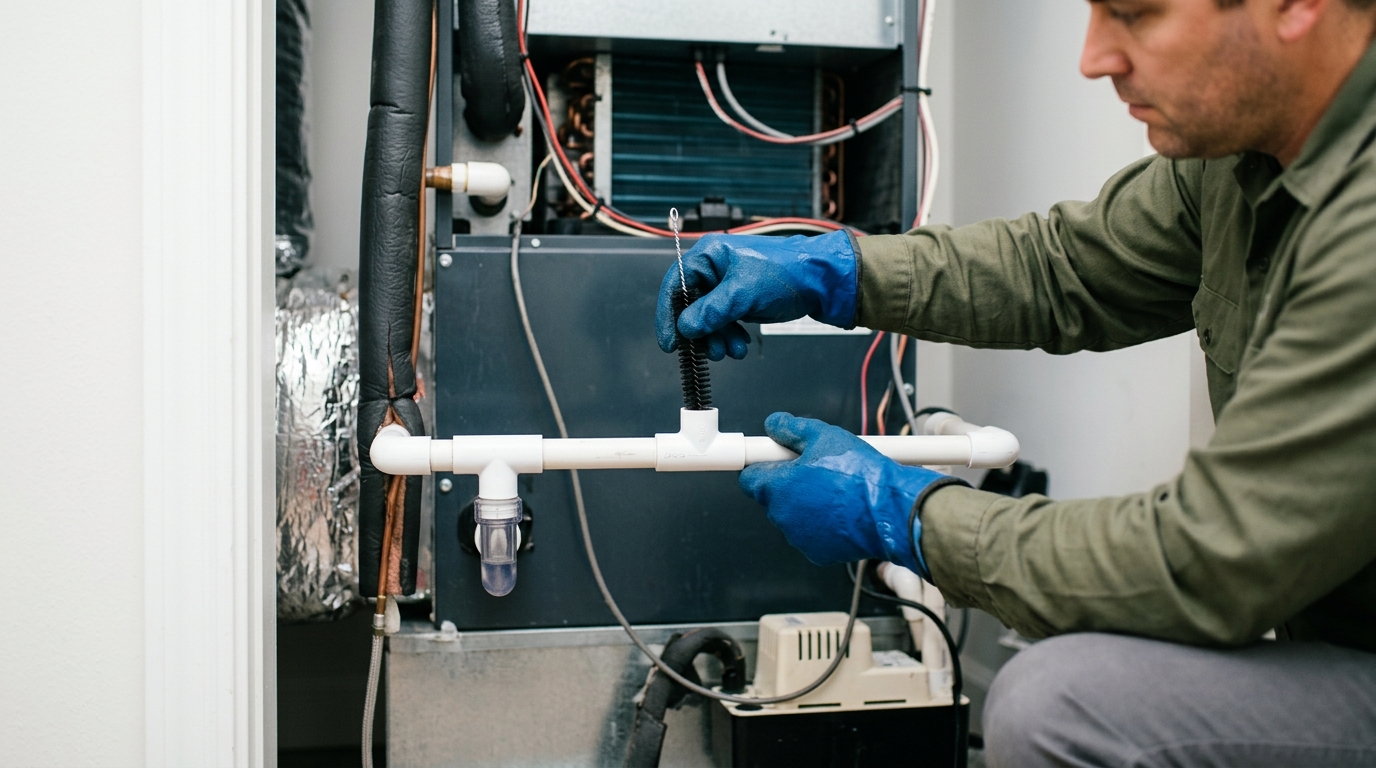
Your air conditioner doesn't just cool the air — it pulls moisture out of it. As warm, humid Alabama air passes over the cold evaporator coil inside your indoor unit, water condenses on the coil and drips into a pan underneath. That pan feeds a condensate drain line, a white PVC pipe that carries the water outside or to a floor drain.
On a humid summer day, a single residential system can pull 5 to 20 gallons of water out of your indoor air. That's a lot of water moving through a narrow pipe, all day, every day. And that warm, damp, dark pipe is a perfect home for algae and mold, which is exactly what eventually clogs it.
Two reasons. First, the humidity — more moisture in the air means more condensate, which means more volume through the line and more organic gunk for algae to feed on. Second, the long cooling season. Your system runs hard from April clear through October, so the drain line is working nonstop for the better part of the year. A line that might clog once a decade in a dry climate can clog every season here if it's never maintained.
Catch any of these early and you avoid the water damage entirely.
Most modern systems have a float switch — a small safety device that shuts the AC down when the drain pan starts to overflow. It's there to protect your home from water damage. So if your AC suddenly stops cooling and the drain line is the culprit, that's actually the safety doing its job. The fan may still run, but no cold air. (If your AC quit and you're not sure why, a backed-up drain is one of the first things we check.)
A puddle near the furnace or air handler, a damp spot on the floor of the closet, or water stains on the ceiling below an attic unit all point to a drain that's overflowing because it can't drain. Don't wait on this one.
Standing water in a backed-up line and pan grows mold, and that smell rides the airflow into your living space. If your vents smell musty when the AC kicks on, a dirty drain is a prime suspect.
When the drain backs up and the pan fills, the system can't shed moisture properly — so the house starts to feel sticky even though the AC is running. If you've noticed the air feels damp lately, it's worth a look.
Water and ceilings don't mix. An attic air handler with a clogged drain can dump gallons into your insulation and drywall before you notice. If you see a ceiling stain growing under an upstairs or attic unit, shut the system off at the thermostat and address the drain before running it again.
A minor clog is a reasonable DIY job. Here's the sequence we'd use.
Prevention is almost free. Pour a cup of distilled white vinegar down the drain access port every one to three months during cooling season. It kills the algae before it can build into a clog. Thirty seconds, a couple times a summer, and you likely never deal with this again.
Some situations are past the DIY point. Call us if:
A professional drain clearing is a quick, affordable visit, and we'll also check that the pan, float switch, and line slope are all doing their jobs so it doesn't come right back. It's also a standard part of a seasonal tune-up — if you're on a maintenance plan, your drain gets flushed before summer as a matter of course.
What you're seeingWhat it means AC quit, fan runs but no coolingFloat switch tripped on a full pan. Clear the drain. Water or stains near the indoor unitDrain overflowing. Shut off, clear before running. Musty smell from the ventsMold in a backed-up line and pan. Flush it. House feels humid with AC onPoor condensate drainage. Check the line. Clog comes back every seasonSlope or design issue. Have it inspected.
Drain line backed up, or want it checked before peak summer? Schedule a visit with Tri-Counties Heating & Air. We'll clear the line, check your float switch and pan, and make sure your system is shedding Alabama's summer moisture the way it should. Serving Birmingham, Homewood, Hoover, Leeds, and the surrounding communities.