Is an HVAC Maintenance Plan Worth It? An Honest Cost Breakdown for Alabama Homeowners
Every spring, somebody at a hardware store, a neighbor, or your HVAC company tells you to sign up for a maintenance plan. Usually around $200 a year. Sometimes a little more, sometimes less. And every spring, a fair number of Alabama homeowners look at that bill and wonder if it's actually worth it — or if it's just a way to keep an HVAC company on retainer.
Fair question. We sell maintenance plans, so anything I say is going to sound like I'm trying to sell you one. So instead of doing that, here's an honest breakdown: what these plans actually include, where the value comes from (math, not vibes), and the cases where you genuinely don't need one.
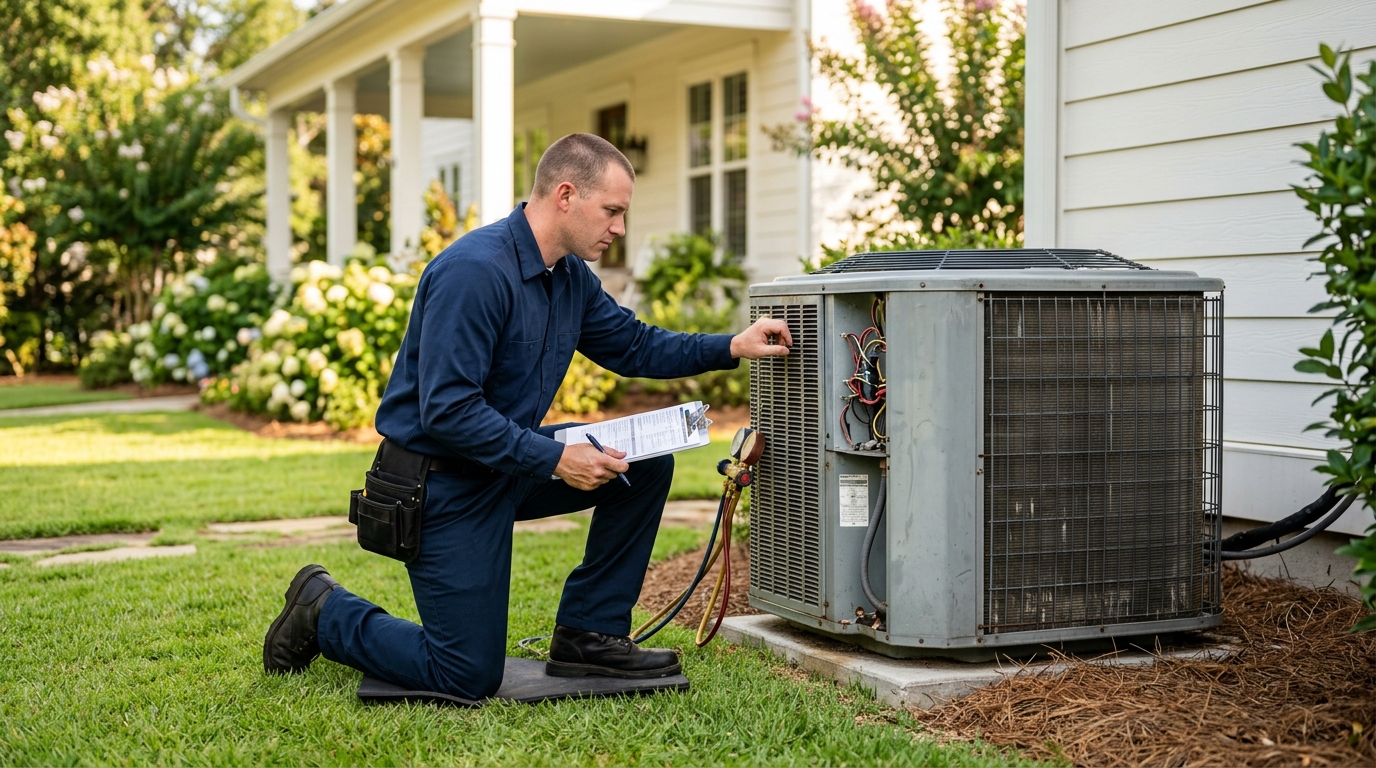
The specifics vary by company, but a standard residential HVAC maintenance plan in Alabama covers two visits a year — a spring tune-up before cooling season and a fall tune-up before heating season. Plus a handful of perks that get bundled in.
The two scheduled visits typically include:
The bundled perks usually look something like this: priority scheduling when the queue is long, 10-15% off any repair parts and labor, no overtime charges on after-hours service, and waived diagnostic fees on service calls.
That's the standard package. Some companies throw in extras — a free thermostat after a certain number of years, IAQ inspections, free filters — but the core is pretty consistent across the industry.
Let's compare a-la-carte pricing to a plan and see where it lands. These are real Alabama-area numbers, not made up.
ServiceTypical cost Spring AC tune-up$129-$179 Fall heating tune-up$129-$179 One unplanned summer service call (diagnostic fee)$89-$129 One capacitor replacement (very common failure)$220-$320 Total$567-$807
ServiceTypical cost Annual plan (2 tune-ups included)$189-$249 Diagnostic fee on summer service callWaived Capacitor replacement (with 15% member discount)$187-$272 Total$376-$521
That's a savings of roughly $190-$290 in a year where you only have one minor repair. If you have zero repairs, the plan still costs less than buying both tune-ups separately at most companies, because plans are priced as a bundle.
The math gets dramatically better the year you have a real problem. A blown blower motor (~$650), a leaking coil ($1,400-$2,200), or a control board replacement ($550-$900) — knock 15% off any of those with a plan and the savings cover several years of plan fees.
Honestly, the strongest argument for a maintenance plan in Alabama isn't the discount. It's the priority scheduling.
Picture a Friday afternoon in late July. It's 96 degrees. Your AC dies at 2 p.m. Every HVAC company in central Alabama is fielding 30-40 emergency calls. Without a plan, you're on a first-come-first-served waitlist, and "tomorrow afternoon" is a hopeful estimate. Plan members get bumped to the front of the queue at most companies. That alone — being seen in 4 hours instead of 30 — is what a lot of homeowners are actually paying for.
The other quiet benefit: catching small problems before they become big ones. A capacitor reading at the edge of its rated range during a spring tune-up is a $200 part you can schedule for next week. The same capacitor failing on the hottest day of the year is a $200 part plus an after-hours call-out plus 24 hours of no AC. Maintenance is mostly an exercise in moving the cost of small repairs from emergencies into ordinary scheduled work.
Most equipment manufacturers void their warranty if you can't show annual maintenance records. If your system is still inside its 10-year parts warranty, an annual maintenance plan is basically the cost of keeping that warranty intact. We've seen homeowners get denied on $1,800 compressor replacements because they couldn't produce maintenance records.
There are real cases where you should skip one. Let's not pretend otherwise.
Your system is 2 years old or newer. Brand-new equipment under full manufacturer warranty doesn't need much. You can probably skip year one and start in year two without missing anything. (Some manufacturers do require year-one maintenance to keep the warranty active — check your paperwork.)
Your system is past 15 years old and you're planning to replace it within 12 months. Paying $200 for a tune-up on a system that's getting yanked next March doesn't pencil out. Limp through one more season, then start fresh with the new install.
You genuinely do your own basic maintenance. If you've got a multimeter, you actually check capacitor microfarad readings each spring, you flush your own drain line, and you keep the condenser clean — you don't need someone else doing it twice a year. Most homeowners don't fall in this group, but some do, and that's fine.
You rent or are about to sell. The benefit accrues to the system owner over years. If you're not going to be living with this system in 2027, the math doesn't favor you.
If you've decided a plan makes sense, here's what separates a good one from a worthless one. We see a lot of weak plans in the market — read the fine print.
You want two. One in spring, one in fall. Some discount plans only include one visit — that's not enough for an Alabama system running both heat and AC.
This is the perk most homeowners actually use. A waived diagnostic on a service call saves $89-$129 every time you call. Plans that don't include this are leaving money on the table.
10% is standard. 15% is good. 20% is rare but real. Over the lifetime of a system, this is where the math gets best — assuming you have at least one repair, which most systems will.
Some plans say "priority" without specifying. Ask explicitly: in a heat wave, does a plan member get same-day service ahead of non-members? If yes, that's a real benefit. If "priority" just means a phone call back faster, less so.
If you sell the house, can the plan transfer to the buyer? Some can, which is a small selling point at closing.
After-hours and weekend calls usually carry a 1.5-2x labor multiplier. Plans that waive this are doing you a real favor in the height of summer.
Your situationMaintenance plan worth it? System is 3-12 years old, you don't do your own serviceYes — clearest case System is 12+ years old and still workingYes, especially for priority scheduling and discounts on the repairs you'll likely need System is brand-new under full warrantyOptional, but worth it to maintain warranty validity System is 15+ years old, replacement planned within a yearSkip it You're a renterThat's the landlord's call, not yours You can read a capacitor reading and clean a coil yourselfSkip it
For a typical central Alabama home — system between 4 and 14 years old, regular use of both AC and heat, homeowner who doesn't want to mess with HVAC themselves — a maintenance plan saves money in years with any repair at all, and breaks roughly even in years with no repairs at all. Add in the priority scheduling and the warranty protection and the math tilts strongly toward yes.
The honest skip cases are narrow. New system in warranty, old system you're replacing soon, or a DIYer who actually does the work. Everybody else is paying about the same money either way — they just get less of it back when something breaks.
Want to see what's actually in our plan before deciding? Schedule a free home assessment with Tri-Counties Heating & Air and we'll walk through your system, show you what condition it's in, and explain exactly what's covered. No pressure, no upsells. Serving Birmingham, Homewood, Hoover, Leeds, and the surrounding communities.