Why Is My AC Freezing Up in the Middle of Summer? Causes and the Safe Way to Thaw It
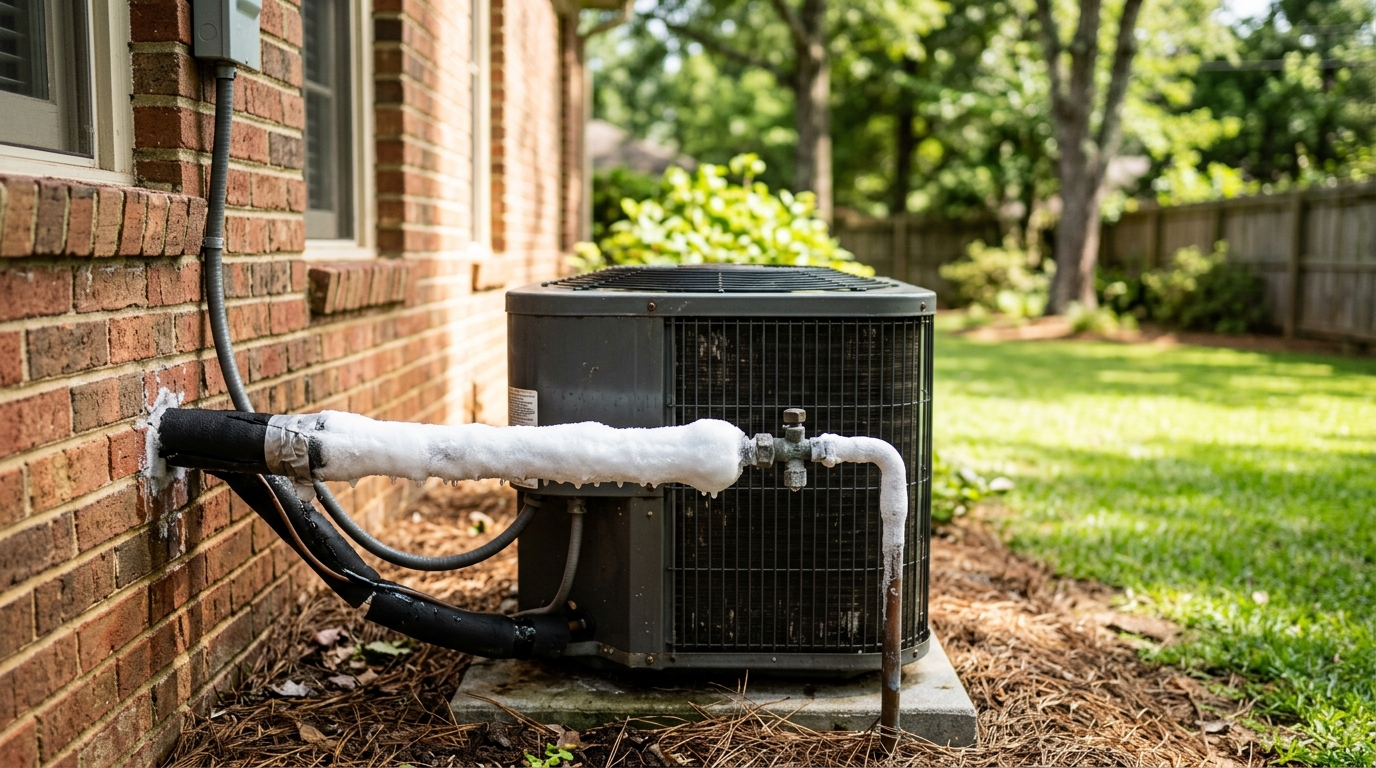

It's 96 degrees outside, the house won't cool down, and when you walk out to the unit there's a pipe wearing a sleeve of ice. In July. It feels like the machine is playing a joke on you. But an AC freezing up in the middle of summer is one of the most common service calls we run in central Alabama — and the reason it happens has nothing to do with the weather being cold.
Here's why a coil ices over in a heat wave, the safe way to thaw it, and how to tell whether you're dealing with a five-dollar fix or a refrigerant leak.
Inside your air handler there's a coil full of refrigerant that runs cold — normally around 40°F — while your home's warm air blows across it. That warm airflow is what keeps the coil above freezing. Take the warm air away, or let the refrigerant pressure drop too low, and the coil's temperature falls below 32°F. Humidity in the air condenses on it, freezes, and now you've got an ice-maker where your evaporator coil used to be.
The ice then blocks what little airflow was left, which makes the coil colder, which makes more ice. It feeds itself. That's why a frozen AC never fixes itself mid-afternoon — once it starts, it only goes one direction.
This is the most common one, and the cheapest:
Less refrigerant means lower pressure, and lower pressure means a colder coil — cold enough to freeze. Here's the part homeowners don't always hear plainly: refrigerant doesn't get "used up." If it's low, it leaked, and topping it off without fixing the leak just schedules the same failure for a few weeks out.
Before anything can be diagnosed or repaired, the ice has to go. Do it this way:
Do not chip, pry, or scrape the ice off. The fins and tubing on an evaporator coil are soft, and one slip turns a frozen coil into a punctured one — which means a refrigerant leak and a far bigger bill. Heat guns and hair dryers are a bad idea too. Air movement and patience, that's the whole trick.
What you noticeMost likely cause Filter was filthy; after thawing and replacing it, cooling works fineAirflow — problem solved Filter clean, vents open, but it froze anywayLow refrigerant or a dirty coil / weak blower It freezes again within days or weeks of thawingRefrigerant leak until proven otherwise Hissing or bubbling near the lines, or ice only on the copper line outsideRefrigerant leak
The one-freeze-after-a-dirty-filter case is genuinely a DIY win. The repeat offender is not. A system that keeps icing over is telling you something specific, and running it frozen strains the compressor — the most expensive part in the machine. If the unit is getting up in years anyway, it's fair to weigh the repair against age; our repair-vs-replace guide walks through that math.
Prevention here is boring and cheap. Change the filter every month during cooling season (our summers are long and dusty, the "every 90 days" printed on the package assumes a milder climate than ours). Keep every supply vent open, even in rooms you don't use. And get the coil cleaned and the refrigerant charge checked at an annual maintenance visit — a tech with gauges will catch a slow leak while it's still a small problem.
An AC freezing up in summer comes down to airflow or refrigerant, almost every time. Thaw it safely — cooling off, fan on, hands off the ice — replace a dirty filter, and give it one more chance. If it freezes again, stop thawing and start dialing, because the second freeze is a symptom, not bad luck.
AC iced over in Birmingham, Homewood, Hoover, or Leeds? Schedule a visit with Tri-Counties Heating & Air. We'll find out why it froze — not just melt it and leave — check the charge, test the blower, and get your cooling back before the next 95-degree afternoon.